Luyện nghe Tiếng Anh 9 Global Success Unit 1
Luyện nghe tiếng Anh 9 Kết nối tri thức
Luyện nghe Tiếng Anh 9 Global Success Unit 1 do VnDoc.com sưu tầm và đăng tải dưới đây nằm trong chuyên mục Tiếng Anh 9 Global Success có đầy đủ file nghe, giúp học sinh luyện kỹ năng nghe hiệu quả và đạt điểm cao trong các phần thi Listening.
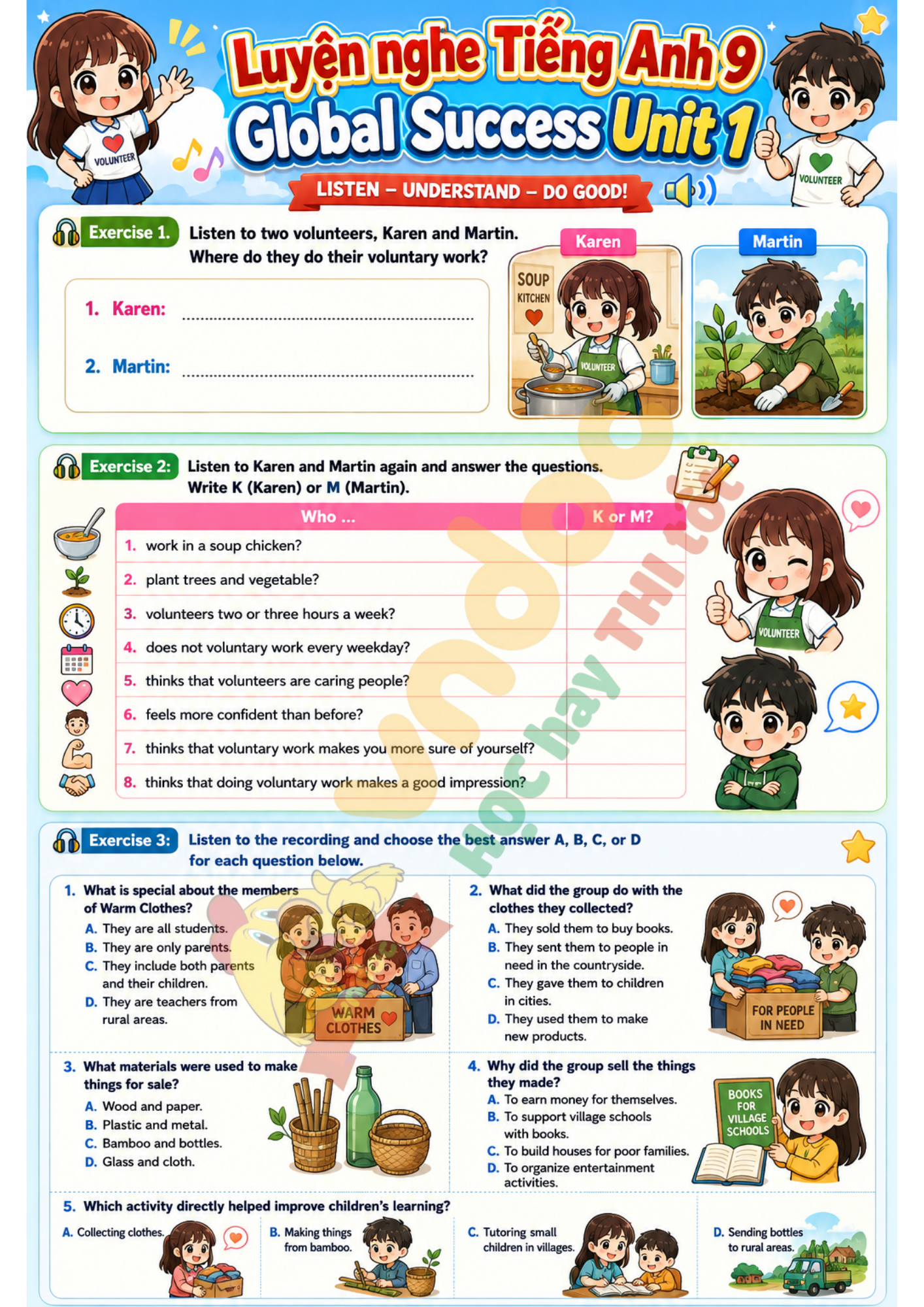
Infographic Listening Unit 1
Nội dung bài tập
Exercise 1. Listen to two volunteers, Karen and Martin. Where do they do their voluntary work?
Bài nghe
1. Karen: ___________________________
2. Martin: ___________________________
Exercise 2: Listen to Karen and Martin again and answer the questions. Write K (Karen) or M (Martin).
Bài nghe
|
Who … |
K or M? |
|
1. work in a soup chicken? |
|
|
2. plant trees and vegetable? |
|
|
3. volunteers two or three hours a week? |
|
|
4. does not voluntary work every weekday? |
|
|
5. thinks that volunteers are caring people? |
|
|
6. feels more confident than before? |
|
|
7. thinks that voluntary work makes you more sure of yourself? |
|
|
8. thinks that doing voluntary work makes a good impression? |
Exercise 3: Listen to the recording and choose the best answer A, B, C, or D for each question below
Bài nghe
1. What is special about the members of Warm Clothes?
A. They are all students.
B. They are only parents.
C. They include both parents and their children.
D. They are teachers from rural areas.
2. What did the group do with the clothes they collected?
A. They sold them to buy books.
B. They sent them to people in need in the countryside.
C. They gave them to children in cities.
D. They used them to make new products.
3. What materials were used to make things for sale?
A. Wood and paper.
B. Plastic and metal.
C. Bamboo and bottles.
D. Glass and cloth.
4. Why did the group sell the things they made?
A. To earn money for themselves.
B. To support village schools with books.
C. To build houses for poor families.
D. To organize entertainment activities.
5. Which activity directly helped improve children's learning?
A. Collecting clothes.
B. Making things from bamboo.
C. Tutoring small children in villages.
D. Sending bottles to rural areas.
Exercise 4: Listen to the audio and decide whether those sentences are TRUE (T) or FALSE (F)
Bài nghe
|
True |
False |
|
|
1. Mr. Nam is about 14 years old. |
|
|
|
2. Mr Nam is described as an unfriendly person. |
|
|
|
3. Mr Nam always calls before delivering a parcel to the writer's house. |
|
|
|
4. Mr Nam checked with the family before handing the parcel to the neighbour. |
|
|
|
5. Mr Nam as an example of a responsible worker who cares about his customers. |
|
Exercise 5: Listen and choose the correct answer A, B, C or D. You will hear TWICE
Bài nghe
1. Where did Mai go last weekend?
A. A modern shopping centre
B. A traditional craft village
C. A local museum
D. A famous city
2. What did Mai see the local artisans doing?
A. Selling food to tourists
B. Building new workshops
C. Making beautiful handicrafts
D. Teaching English to visitors
3. Why do the artisans use some modern machines?
A. To save time
B. To attract more tourists
C. To make cheaper products
D. To replace traditional skills
4. Why do older artisans pass down their skills to younger people?
A. To help them find jobs in the city
B. To preserve their traditional craft
C. To make the village more modern
D. To produce more souvenirs
5. What can we infer from the conversation about the craft village?
A. Traditional methods have completely disappeared.
B. Young people are not interested in traditional crafts.
C. The village combines traditional skills with some modern technology.
D. All handicrafts in the village are made by machines.
*Tải file để xem đáp án chi tiết*
Mời bạn đọc tải trọn bộ bài tâp và file nghe mp3 tại đây: Luyện nghe Tiếng Anh 9 Global Success Unit 1.