Luyện nói Tiếng Anh 8 Global Success Unit 9
Tiếng Anh 8 Global Success Unit 9 Speaking
Speaking Practice Global Success 8 Unit 9 Natural disasters giúp học sinh luyện kỹ năng nói thông qua những câu hỏi xoay quanh chủ đề gần gũi về Thảm họa thiên nhiên. Bài viết tổng hợp hệ thống câu hỏi thường gặp, câu trả lời mẫu theo ba phần thi nói khác nhau, từ vựng trọng tâm, cấu trúc ngữ pháp và mẹo Speaking giúp các em tự tin giao tiếp cũng như đạt kết quả tốt trong các bài kiểm tra.
Infographic Unit 9 Speaking
Nội dung tài liệu
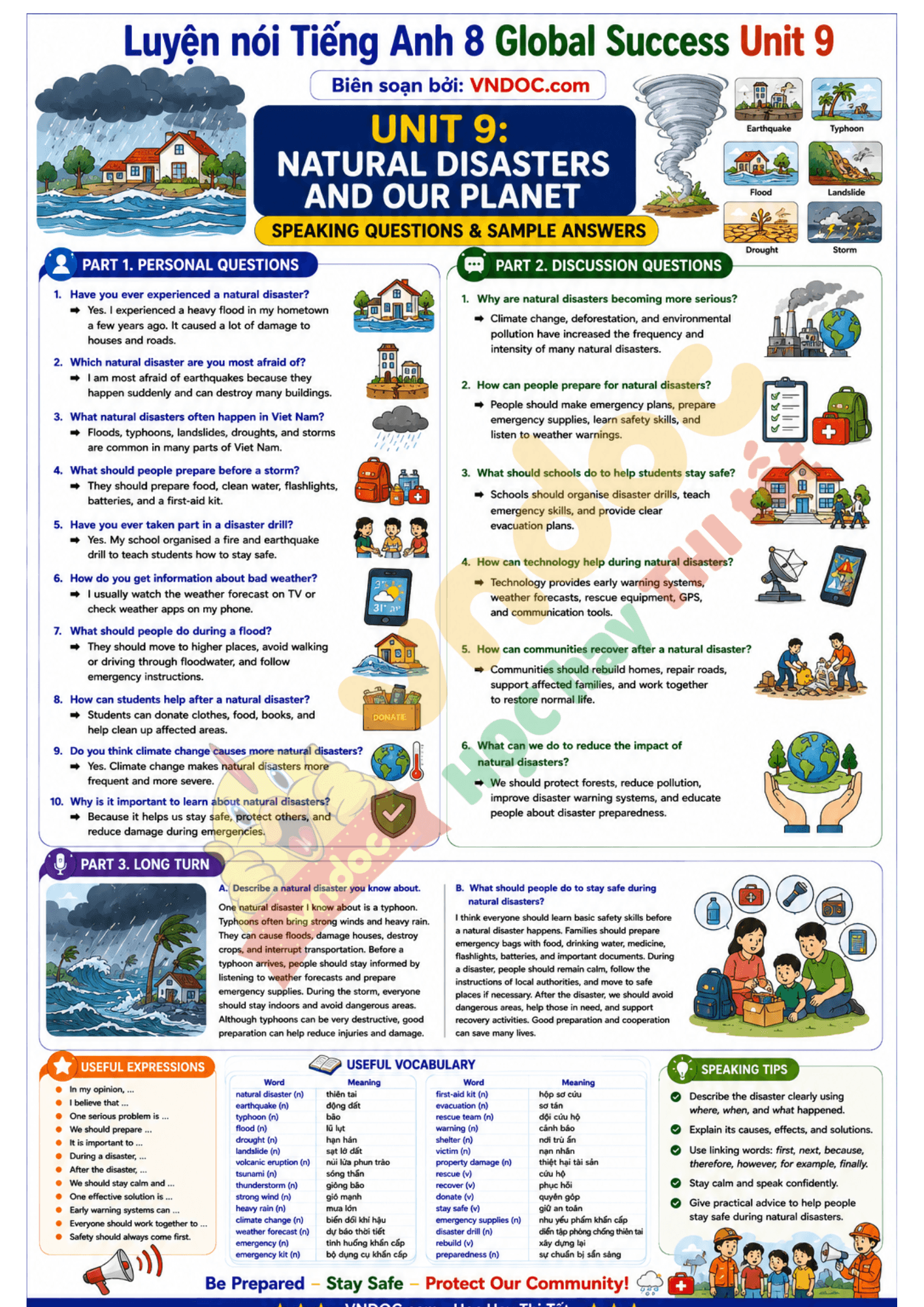
SPEAKING QUESTIONS & SAMPLE ANSWERS
PART 1. PERSONAL QUESTIONS
1. Have you ever experienced a natural disaster?
➡ Yes. I experienced a heavy flood in my hometown a few years ago. It caused a lot of damage to houses and roads.
2. Which natural disaster are you most afraid of?
➡ I am most afraid of earthquakes because they happen suddenly and can destroy many buildings.
3. What natural disasters often happen in Viet Nam?
➡ Floods, typhoons, landslides, droughts, and storms are common in many parts of Viet Nam.
4. What should people prepare before a storm?
➡ They should prepare food, clean water, flashlights, batteries, and a first-aid kit.
5. Have you ever taken part in a disaster drill?
➡ Yes. My school organised a fire and earthquake drill to teach students how to stay safe.
6. How do you get information about bad weather?
➡ I usually watch the weather forecast on TV or check weather apps on my phone.
7. What should people do during a flood?
➡ They should move to higher places, avoid walking or driving through floodwater, and follow emergency instructions.
8. How can students help after a natural disaster?
➡ Students can donate clothes, food, books, and help clean up affected areas.
9. Do you think climate change causes more natural disasters?
➡ Yes. Climate change makes natural disasters more frequent and more severe.
10. Why is it important to learn about natural disasters?
➡ Because it helps us stay safe, protect others, and reduce damage during emergencies.
PART 2. DISCUSSION QUESTIONS
1. Why are natural disasters becoming more serious?
➡ Climate change, deforestation, and environmental pollution have increased the frequency and intensity of many natural disasters.
2. How can people prepare for natural disasters?
➡ People should make emergency plans, prepare emergency supplies, learn safety skills, and listen to weather warnings.
3. What should schools do to help students stay safe?
➡ Schools should organise disaster drills, teach emergency skills, and provide clear evacuation plans.
4. How can technology help during natural disasters?
➡ Technology provides early warning systems, weather forecasts, rescue equipment, GPS, and communication tools.
5. How can communities recover after a natural disaster?
➡ Communities should rebuild homes, repair roads, support affected families, and work together to restore normal life.
6. What can we do to reduce the impact of natural disasters?
➡ We should protect forests, reduce pollution, improve disaster warning systems, and educate people about disaster preparedness.
PART 3. LONG TURN
A. Describe a natural disaster you know about.
One natural disaster I know about is a typhoon. Typhoons often bring strong winds and heavy rain. They can cause floods, damage houses, destroy crops, and interrupt transportation. Before a typhoon arrives, people should stay informed by listening to weather forecasts and prepare emergency supplies. During the storm, everyone should stay indoors and avoid dangerous areas. Although typhoons can be very destructive, good preparation can help reduce injuries and damage.
>> Tải file để xem trọn bộ