Tiếng Anh 12 Bright Progress Check (Units 3 - 4)
Tiếng Anh Bright 12 trang 53
Giải bài tập SGK tiếng Anh 12 Bright Progress Check Units 3 - 4 trang 53 hướng dẫn giải chi tiết các phần bài tập trong Sách giáo khoa tiếng Anh lớp 12 Bright Progress Check Units 3 - 4 giúp các em học sinh chuẩn bị bài tập tại nhà hiệu quả.
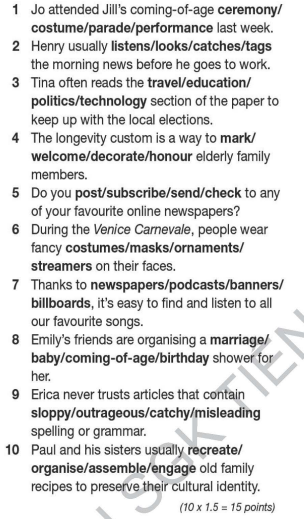
1. Choose the correct option. Chọn đáp án đúng.
Đáp án
| 1 - ceremony | 2 - catches | 3 - politics | 4 - honour | 5 - subscribe |
| 6 - masks | 7 - podcasts | 8 - baby | 9 - sloppy | 10 - recreate |
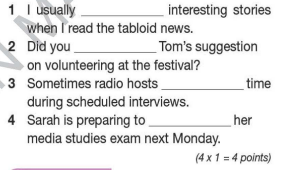
2. Fill in each gap with run across, run out of, go along with, or go in for. Điền vào mỗi chỗ trống với run across, run out of, go along with, hoặc go in for.
Đáp án
1 - run across
2 - go along with
3 - run out of
4 - go in for
3. Choose the correct option. Chọn đáp án đúng.
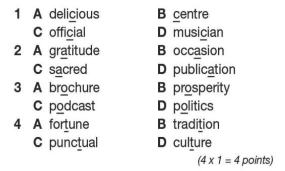
4. Choose the word that has the underlined part pronounced differently from the others. Chọn từ có phần gạch chân phát âm khác với các từ còn lại.
Đáp án
| 1 - B | 2 - A | 3 - A | 4 - B |
5. Choose the correct response. Chọn phản hồi đúng.
Mark is reading the news.
Mark: "Guess what? There are now over 4.2 billion social media users in the world."
Peter: "_____.”
A. What are you reading?
B. You're joking!
C. But what can we do?
D. I completely agree.
Đáp án
Chọn C.
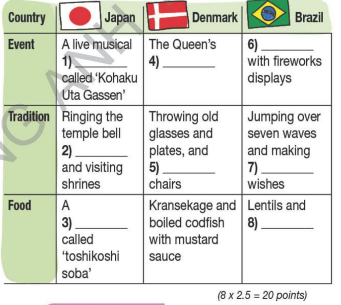
6. Read the text and complete the table for questions (1-8). Write NO MORE THAN THREE WORDS AND/OR A NUMBER from the text for each answer. Đọc bài khoá và hoàn thành bảng cho câu các câu hỏi (1-8). Viết KHÔNG QUÁ BA TỪ VÀ/HOẶC MỘT CON SỐ cho mỗi câu trả lời.
New Year Celebrations AROUND the WORLD
The beginning of a New Year is an important time for people everywhere and New Year celebrations differ from place to place. Here are some interesting New Year celebrations from different parts of the globe!
Japan
The New Year celebration in Japan, called Shogatsu, takes place on 1st January. Families clean their homes in a practice called Osoji in order that they get rid of bad luck from the previous year. They also decorate their homes with traditional, handmade ornaments to create a festive atmosphere. On New Year’s Eve, or Omisoka, they eat ‘toshikoshi soba’, a buckwheat noodle soup, and watch a live musical programme called “Kohaku Uta Gassen” on TV. Then, they gather at their local temple, where they ring the temple bell 108 times. They believe this helps to remove their negative desires and refresh their souls before they welcome the new year. On New Year’s Day, many Japanese people visit shrines called “Hatsumode” pray for good health, fortune and prosperity. It is a special time for families to think about the past 12 months and plan for new beginnings.
Denmark
In Denmark, New Year’s Eve is on the last day of December. After people listen to the Queen's New Year speech on New Year's Eve, they throw old glasses and plates against the doors of friends and family so they can get rid of bad spirits. They also have another special tradition where people stand on chairs and jump off them together at midnight. This means that they are leaping into the new year hoping for good luck. On New Year's Eve, Danish people typically eat a very tall traditional cake called “Kransekage” eating boiled codfish with mustard sauce on 1st January.
Brazil
In Brazil, 31st December is an important time of celebration. At this time of year, it is traditional for people to wear white clothing and attend lively beach parties while they enjoy spectacular firework displays. People get together with families and friends and eat traditional foods like lentils and pomegranate seeds. The number seven is considered lucky in Brazilian culture, so people eat seven pomegranate seeds before midnight for good luck. Then, at the beach, they jump over seven waves, making a hopeful new year wish for each wave.
Đáp án
| 1 - programme on TV | 2 - 108 times | 3 - buckwheat noodle soup | 4 - New year speech |
| 5 - jumping off | 6 - attending beach parties | 7 - new year | 8 - pomegranate seeds |
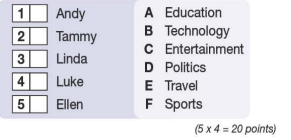
7. Listen and match the speakers (1-5) to their favourite news sections (A-F). There is one extra news section. Lắng nghe và nối những người nói (1-5) với những phần tin tức ưa thích (A-F). Có một phần tin tức bị dư.
Đáp án
1 - F; 2 - D; 3 - C; 4 - A; 5 - E
Nội dung bài nghe
Andy: I like to start my day with a good read of the back pages of the newspaper. I'm always interested to read interviews with athletes and coaches and get updates about which teams are playing well at the moment.
Tammy: For me, staying informed on current events is essential. So I often follow reliable sources that provide accurate reports of what is happening in our government. Whether it's a national election taking place or a new law being introduced, I want to know what's going on in my country.
Linda: I love reading about what's happening in the world of show business from red carpet events to celebrity gossip and movie reviews. That's why I always stay up to date on all of them. It's not the most educational kind of news content, but the stories are light, fun, and easy to read.
Luke: As a parent, it's my job to stay informed of the latest trends and developments in our schools and universities. I always make sure to read news on this topic regularly so that I can make informed decisions for my children and help them have the best learning experience as possible.
Ellen: I always plan for my next adventure, so I love articles about exotic locations in faraway places. It's exciting to read about interesting destinations I can visit and unusual activities I can do the next time I go to a foreign place.
8. Research a festival online. Then, write a leaflet (about 120-150 words) about the festival. Nghiên cứu một lễ hội trên mạng. Sau đó viết một tờ rơi (khoảng 120-150 từ) về lễ hội.
Trên đây là Giải tiếng Anh lớp 12 Bright Progress Check Units trang 53 đầy đủ nhất.


