Tiếng Anh 12 Bright Unit 3 3a Reading
Tiếng Anh 12 Bright Unit 3a. Reading trang 36, 37
Giải SGK tiếng Anh 12 Bright unit 3 The mass media 3a Reading hướng dẫn soạn bài tập tiếng Anh lớp 12 trang 36 37 giúp các em học sinh chuẩn bị bài tập hiệu quả.
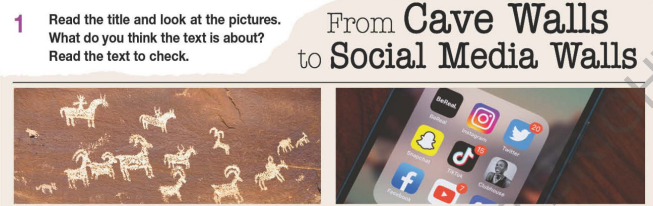
1. Read the title and look at the pictures. What do you think the text is about? Then read to check. Đọc tiêu đề và nhìn vào hình ảnh. Bạn nghĩ văn bản nói về điều gì? Sau đó đọc để kiểm tra.
Đáp án
I think the text is about the development of media over time.
2. a) Read the text. Choose the option (A, B, C or D) that best fits each gap (1-5). Đọc văn bản. Chọn đáp án (A, B, C hoặc D) phù hợp với mỗi chỗ trống (1-5).
From Cave Walls to Social Media Walls
In today's world, we have different kinds of media available to us at all times, but did you know that the history of media actually goes back millennia?
The word ‘media’ refers to the different ways in which people transmit information. By this definition, we can say with confidence that human beings created the first type of media around 64,000 years ago when we first began painting simplistic 1) _____ on the walls of caves. Since then, the more we have evolved, the more advanced our media have become.
According to experts, it was sometime around 3,400 BC when human beings first began utilising written language as a means of communication. For 2) _____, apart from verbal communication, people had to write everything manually until the mid-1440s. It was Johannes Gutenberg 3) _____ revolutionised media when he created an invention called the printing press. This marked the beginning of what we now call 'mass media: Gutenberg's innovative invention made print media like books, newspapers and magazines at a large scale and 4) _____ information with a wider audience than ever before.
Several hundred years after the invention of the printing press, during the 19th century, we created cameras and later, the radio. The invention of the radio began the age of broadcast media, and the development of television swiftly followed it. This allowed 5) _____ people to watch fascinating movies. programmes and documentaries. all of which remain popular today.
In the 2000s, we saw the rise of digital media. Now, we visit web pages, listen to podcasts, stream music and communicate on social media using our smartphones. We even use QR codes to share information instantly. We have come a long way, and so have the ways we communicate!
Đáp án
| 1 - B | 2 - D | 3 - B | 4 - A | 5 - D |
b) Listen/Watch and read to check. Nghe và Xem phim để kiểm tra.
3. Read the text again and identify the author's purpose. Choose the best answer (A, B, C or D). Đọc bài khoá lại lần nữa và xác định mục đích của tác giả. Chọn đáp án đúng (A, B, C hoặc D).
The author's purpose is to ...
A. compare different types of media.
B. outline the benefits of modern media.
C. describe the development of media.
D. discuss the importance of media.
Đáp án
Chọn C
4. How have the media changed over time? Talk about the timeline of media change in the text with your partners. Phương tiện truyền thông đã thay đổi như thế nào theo thời gian? Nói về dòng thời gian thay đổi phương tiện truyền thông trong văn bản với bạn cùng bàn của bạn.
Gợi ý
According to the text, Media has been around for 64,000 years since people started painting symbols on the caves. The mid-1440s saw a revolution with Gutenberg’s printing press, marking the beginning of mass media. The 19th century introduced broadcast media with the invention of the camera and radio, followed by television. The 2000s witnessed a digital transformation with the rise of internet-based media, including web pages, podcasts, music streaming, and social media. Today, we even use QR codes for instant information sharing, reflecting our continuous progress in communication methods.
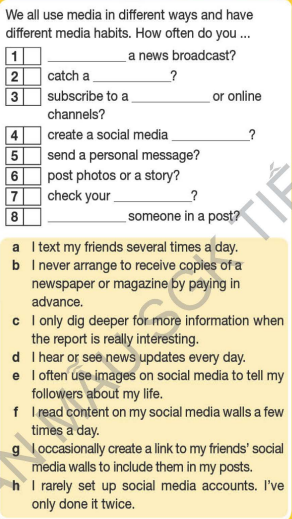
5. a) Fill in each gap with tag, profile, follow, publication, news bulletin or newsfeed. Then listen and check. Điền các từ tag, profile, follow, publication, news bulletin hoặc newsfeed vào chỗ trống. Sau đó nghe và kiểm tra.
Đáp án
1. ___ follow a news broadcast?
2. ___ catch a news bulletin?
3. ___ subscribe to a publication or online channels?
4. ___ create a social media profile?
5. ___ send a personal message?
6. ___ post photos or a story?
7. ___ check your newsfeed?
8. ___ tag someone in a post?
b) Match the questions (1-8) to the answers (a-h). Nối các câu hỏi (1-8) với các câu hỏi (a-h).
Đáp án
| 1 - d | 2 - c | 3 - b | 4 - h |
| 5 - a | 6 - e | 7 - f | 8 - g |
6. Answer the questions (1-8) in Exercise 5 using your own words. Trả lời các câu hỏi (1-8) ở bài tập 5 bằng cách sử dụng ý kiến riêng của bạn.
Đáp án
1 - I watch the news broadcast on VTV3 every night.
2 - I prefer watching news on TV to reading news bulletin.
3 - I spend nearly $50 for The Guardian printed version every 3 months.
4 - I create a social media account and upload the story of my life there.
5 - I spend four hours each day chatting online with my friends.
6 - I often upload images on social media to save my beautiful memories.
7 - I occasionally create a link to my friends' social media walls to include them in my posts.
8 - I often tag someone in a post.
7. a) Do you prefer reading printed newspapers or online news? Give your reasons. Bạn thích đọc báo in hay báo mạng hơn? Hãy đưa ra lí do.
Đáp án
I’d rather read online news because it’s convenient for me. I mean I can get access to the Internet every time or anywhere and read the articles on my phone or my tablet.
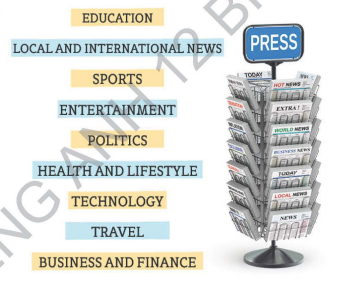
b) Which of the following sections are your favourites? Which are your least favourites? Why? Những phần nào dưới đây là phần ưa thích của bạn? Phần nào không phải là phần ưa thích của bạn? Tại sao?
8. How has the Internet changed the way we stay up to date on current news? Discuss in pairs. You can mention the following media below. In-tơ-nét đã thay đổi cách chúng ta cập nhật tin tức như thế nào? Thảo luận theo cặp. Bạn có thể nhắc đến các loại phương tiện truyền thông bên dưới.
• web pages
• podcasts
• smartphones
• QR codes
• news bulletins
• newsfeeds
Gợi ý
The Internet has transformed the way people consume news by providing a variety of platforms that suit various individual preferences.
Value: News media (Giá trị: Truyền thông tin tức)
Do you agree with the following statements? Why/Why not? Bạn có đồng ý với các phát biểu sau hay không? Tại sao/ Tại sao không?
News media ...
1. share important information with the public.
2. are always truthful with their stories.
3. can shape people's opinions.
Trên đây là Giải student book Tiếng Anh Bright 12 unit 3 The mass media Reading trang 36 37.


