SBT Tiếng Anh 11 Global Success Unit 2
Soạn SBT Tiếng Anh 11 Unit 2
SBT Tiếng Anh 11 Global Success Unit 2 tổng hợp lời giải các bài tập trong chủ đề The Generation Gap, giúp học sinh thuận tiện kiểm tra đáp án và ôn tập kiến thức. Nội dung được trình bày theo từng phần, hỗ trợ các em tra cứu và học Unit 2 hiệu quả hơn.
Pronunciation Unit 2 lớp 11
1. Read the following sentences and choose the full form of the underlined words. Then practice saying the sentences
(Đọc các câu sau và chọn dạng đầy đủ của các từ bị gạch chân. Sau đó luyện tập nói các câu)
1. She’s never discussed her problems with her father.
A. She is
B. She has
2. There’s always some disagreement between me and my mother.
A. There is
B. There has
3. I’d like some fruit cake, please.
A. I would
B. I had
4. We’d lived with our extended family before we moved to a new house.
A. We would
B. We had
Gợi ý đáp án
|
1. B |
2. A |
3. A |
4. B |
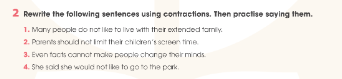
2. Rewrite the following sentences using contractions. Then practise saying them.
(Viết lại các câu sau sử dụng dạng viết tắt. Sau đó luyện tập nói chúng)
Gợi ý đáp án
1. Many people don’t like to live with their extended family.
2. Parents shouldn’t limit their children’s screen time.
3. Even facts can’t make people change their minds.
4. She said she wouldn’t like to go to the park
Vocabulary Unit 2 lớp 11
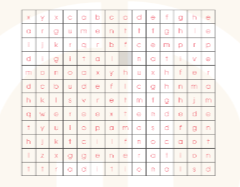
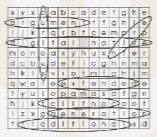
1. Find the following words in the word search
(Tìm các từ sau trong ô chữ tìm từ)
Gợi ý đáp án
2. Choose the best answers to complete the sentences
(Chọn những đáp án đúng nhất để hoàn thành các câu)
1. It is impossible to avoid daily __________ when you live with your extended family.
A. arguments
B. views
C. attitudes
D. characteristics
2. Older generations often have very __________ about how people should live.
A. common characteristics
B. traditional views
C. generational conflicts
D. cultural values
3. We should respect the __________ that have been passed down from the previous generations.
A. family conflicts
B. generational differences
C. cultural values
D. common behaviours
4. Educational games can help bridge the __________ between children, parents, and grandparents.
A. nuclear family
B. extended family
C. common behaviour
D. generation gap
5. Older generations can cope with difficulties because they have __________ many changes in their lives.
A. experienced
B. refused
C. looked for
D. influenced
6. My little brother always asks questions and is __________ to find out all the answers.
A. strange
B. curious
C. experienced
D. responsible
7. Gen Zers are very __________ as they always come up with new ideas or things.
A. experienced
B. curious
C. creative
D. traditional
8. My parents need to __________ someone to look after my grandparents.
A. lose
B. play
C. gain
D. hire
Gợi ý đáp án
|
1. A |
2. B |
3. C |
4. D |
5. A |
6. B |
7. C |
8. D |
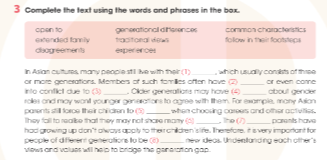
3. Complete the text using the words and phrases in the box
(Hoàn thành đoạn văn sử dụng các từ và cụm từ ở trong hộp)
Gợi ý đáp án
|
1. extended family |
2. disagreements |
|
3. generational differences |
4. traditional views |
|
5. follow in their footsteps |
6. common characteristics |
|
7. experiences |
8. open to |
Hướng dẫn dịch bài đọc
Trong các nền văn hóa châu Á, nhiều người vẫn sống với đại gia đình của họ, thường bao gồm ba thế hệ trở lên. Các thành viên của những gia đình như vậy thường có bất đồng hoặc thậm chí xảy ra xung đột do sự khác biệt về thế hệ. Các thế hệ lớn tuổi hơn có thể có quan điểm truyền thống về vai trò giới và có thể muốn các thế hệ trẻ đồng ý với họ. Ví dụ, nhiều bậc cha mẹ châu Á vẫn buộc con cái họ phải theo bước chân của họ khi lựa chọn nghề nghiệp và các hoạt động khác. Họ không nhận ra rằng họ có thể không chia sẻ nhiều đặc điểm chung. Kinh nghiệm mà cha mẹ đã có khi lớn lên không phải lúc nào cũng áp dụng cho cuộc sống của con cái họ. Do đó, điều rất quan trọng đối với những người thuộc các thế hệ khác nhau là cởi mở với những ý tưởng mới. Hiểu quan điểm và giá trị của nhau sẽ giúp thu hẹp khoảng cách thế hệ.
Grammar Unit 2 lớp 11
1. Choose the best answers to complete the sentence
(Chọn các câu trả lời đúng nhất để hoàn thành câu)
1. My mother wanted to become a dancer, but she __________ follow in her parents’ footsteps and became a medical doctor.
A. had to
B. must
C. shouldn’t
D. has to
2. You __________ wear shorts to school. Please put your school uniform on.
A. must
B. mustn’t
C. have to
D. don’t have to
3. My parents are always open to different views. I __________ agree with their opinions.
A. have to
B. must
C. don’t have to
D. mustn’t
4. I think parents __________ limit their children’s screen time to protect their eyesight.
A. mustn’t
B. don’t have to
C. shouldn’t
D. should
5. Parents __________ expect their children to take care of them when they get old. Their adult children will have their own life and many other duties.
A. shouldn’t
B. don’t have to
C. must
D. should
6. There are agreed rules in each family that its members __________ follow.
A. don’t have to
B. must
C. mustn’t
D. had to
7. You should be yourself! You __________ worry too much about what other people think about you.
A. should
B. have to
C. don’t have to
D. didn’t have to
8. In some cultures, women don't get an education. They __________ stay at home and do all the household chores.
A. shouldn’t
B. don’t have to
C. should
D. have to
Gợi ý đáp án
|
1. A |
2. B |
3. C |
4. D |
|
5. A |
6. B |
7. C |
8. D |
2. Complete the sentences using the correct form of the words in the box. Some words are used more than once.
(Hoàn thành các câu sử dụng dạng đúng của từ trong hộp. Một vài từ được sử dụng hơn một lần)
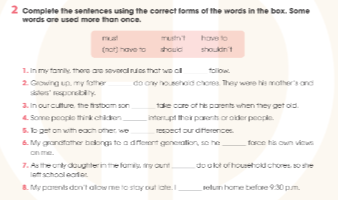
Gợi ý đáp án
|
1. must/ have to |
2. didn’t have to |
|
3. has to/ must/ should |
4. mustn’t/ shouldn’t |
|
5. should |
6. shouldn’t |
|
7. had to |
8. must/ have to |
1. In my family, there are several rules that we all must/have to follow.
(Trong gia đình tôi, có một số quy tắc mà tất cả chúng tôi phải tuân theo.)
2. Growing up, my father didn't have to do any household chores. They were his mother’s and sisters’ responsibility.
(Lớn lên, bố tôi không phải làm bất kỳ công việc nhà nào. Đó là trách nhiệm của mẹ và các chị gái anh.)
3. In our culture, the firstborn son has to/must/ should take care of his parents when they get old.
(Trong nền văn hóa của chúng tôi, con trai đầu lòng phải/ nên chăm sóc cha mẹ khi họ về già.)
4. Some people think children mustn't/shouldn't interrupt their parents or older people.
(Một số người cho rằng trẻ em không được/không nên ngắt lời cha mẹ hoặc người lớn tuổi hơn.)
5. To get on with each other, we should respect our differences.
(Để hòa thuận với nhau, chúng ta nên tôn trọng sự khác biệt của nhau.)
6. My grandfather belongs to a different generation, so he shouldn't force his own views on me.
(Ông tôi thuộc thế hệ khác, vì vậy ông không nên áp đặt quan điểm của mình lên tôi.)
7. As the only daughter in the family, my aunt had to do a lot of household chores, so she left school earlier.
(Là con gái duy nhất trong gia đình, dì tôi phải làm rất nhiều việc nhà nên dì nghỉ học sớm hơn.)
8. My parents don’t allow me to stay out late. I must/have to return home before 9:30 p.m.
(Bố mẹ tôi không cho phép tôi đi chơi khuya. Tôi phải về nhà trước 9:30 tối.)
3. Rewrite the sentences without changing their meanings using the modal verbs in brackets.
(Viết lại các câu mà không thay đổi nghĩa, sử dụng các động từ khuyết thiếu ở trong ngoặc)
You are required to ask your parents for permission before going out. (must)
(Bạn phải xin phép bố mẹ trước khi ra ngoài.)
→ ___________________________________________________________________
2. You are not allowed to colour your hair. (mustn’t)
(Bạn không được phép nhuộm tóc.)
→ ___________________________________________________________________
3. It is not necessary for children to go to kindergarten. (not have to)
(Trẻ em không nhất thiết phải đi mẫu giáo.)
→ ___________________________________________________________________
4. It is a good idea for parents to try to understand their teenage children. (should)
(Cha mẹ nên cố gắng hiểu con cái tuổi teen của mình.)
→ ___________________________________________________________________
5. Women were responsible for all household chores in the past. (had to)
(Phụ nữ trước đây phải đảm nhiệm mọi công việc nhà.)
→ ___________________________________________________________________
6. It is not a good idea for you to study at night. (shouldn’t)
(Bạn không nên học buổi tối.)
→ ___________________________________________________________________
7. You are not allowed to stay overnight at your friend’s house. (mustn’t)
(Bạn không được phép ở lại qua đêm tại nhà bạn.)
→ ___________________________________________________________________
8. He is required to look after his younger brother when his parents are still at work. (has to)
(Anh ấy phải chăm sóc em trai khi bố mẹ anh ấy vẫn đi làm.)
→ ___________________________________________________________________
Gợi ý đáp án
1. You must ask your parents for permission before going out.
2. You mustn’t colour your hair.
3. Children don’t have to go to kindergarten.
4. Parents should try to understand their teenage children.
5. Women had to do all household chores in the past./
Women had to be responsible for all household chores in the past.
Women had to take responsibility for all household chores in the past
6. You shouldn’t study at night.
7. You mustn’t stay overnight at your friend’s house.
8. He has to look after his younger brother when his parents are still at work.
Reading Unit 2 lớp 11
1. Read the text and choose the best answers
(Đọc đoạn văn và chọn các câu trả lời đúng nhất)
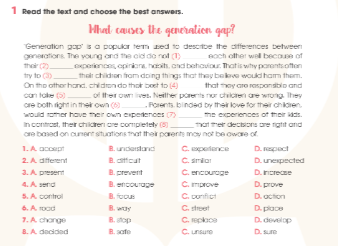
Gợi ý đáp án
|
1. B |
2. A |
3. B |
4. D |
5. A |
6. B |
7. C |
8. D |
Bài 2 - Reading Unit 2 lớp 11
2. Read the text and complete these sentences with no more than TWO words from the text.
(Đọc đoạn văn và hoàn thành các câu không quá HAI từ)
Bridging the generation gap
As time goes by, customs and traditions, which help shape the identity of an individual, change. That is why people belonging to different generations don’t usually share the same values and beliefs. The difference in politics, culture, and other areas of life is what separates the generations and is often described as a generation gap. This can lead to frequent disagreements or even conflicts between the generations in a family. Therefore, bridging the generation gap is important. Below are some tips on how different generations in a family can connect.
First, all generations should be open to new ideas. Having more life experiences, parents often think that they know what is best for their children. However, the world is changing all the time. So, parents should keep an open mind about new ideas or things that probably didn’t even exist when they were growing up. For their part, children should also be willing to listen to their parents and try to learn important life lessons from them.
Second, it is important for parents and children to make time for each other every day. Poor communication or lack of it can harm the relationship between family members. They should make an effort to listen to each other. For example, start by asking your parents about how they spend their day at work. Finding some enjoyable activities that you can all do together is the best way to strengthen family bonds.
In conclusion, healthy family love can help bridge the generation gap. Parents and children love each other for who they are, no matter what they say, think, or do. Even if people might not approve of what other family members do or say, they are still family and always will be.
1. Bridging the generation gap is important to avoid __________ and conflicts between the generations in a family.
2. Because they have more __________, parents believe they know what their children need.
3. Children should also learn important __________ from their parents.
4. The relationship between family members can suffer because of __________ or lack of it.
5. Healthy __________ means love, care, loyalty, and respect for family members, no matter what they say, think, or do.
Gợi ý đáp án
|
1. disagreements |
2. life experiences |
3. life lessons |
|
4. poor communication |
5. family love |
Hướng dẫn dịch bài đọc
Rút ngắn khoảng cách thế hệ
Khi thời gian trôi qua, các phong tục và truyền thống, giúp định hình bản sắc của một cá nhân, sẽ thay đổi. Đó là lý do tại sao những người thuộc các thế hệ khác nhau thường không chia sẻ những giá trị và niềm tin giống nhau. Sự khác biệt về chính trị, văn hóa và các lĩnh vực khác của cuộc sống là điều ngăn cách các thế hệ và thường được mô tả là khoảng cách thế hệ. Điều này có thể dẫn đến những bất đồng thường xuyên hoặc thậm chí xung đột giữa các thế hệ trong một gia đình. Do đó, thu hẹp khoảng cách thế hệ là rất quan trọng. Dưới đây là một số lời khuyên về cách các thế hệ khác nhau trong một gia đình có thể kết nối với nhau.
Đầu tiên, tất cả các thế hệ nên cởi mở với những ý tưởng mới. Có nhiều kinh nghiệm sống hơn, cha mẹ thường cho rằng mình biết điều gì là tốt nhất cho con cái. Tuy nhiên, thế giới luôn thay đổi. Vì vậy, cha mẹ nên giữ một tâm trí cởi mở về những ý tưởng mới hoặc những điều có lẽ thậm chí không tồn tại khi họ lớn lên. Về phần mình, con cái cũng nên sẵn sàng lắng nghe cha mẹ và cố gắng học những bài học quan trọng trong cuộc sống từ họ.
Thứ hai, điều quan trọng là cha mẹ và con cái phải dành thời gian cho nhau mỗi ngày. Giao tiếp kém hoặc thiếu giao tiếp có thể gây hại cho mối quan hệ giữa các thành viên trong gia đình. Họ nên cố gắng lắng nghe nhau. Ví dụ, bắt đầu bằng cách hỏi cha mẹ của bạn xem họ dành cả ngày ở nơi làm việc như thế nào. Tìm một số hoạt động thú vị mà tất cả các bạn có thể làm cùng nhau là cách tốt nhất để củng cố mối quan hệ gia đình.
Tóm lại, tình yêu thương lành mạnh trong gia đình có thể giúp thu hẹp khoảng cách thế hệ. Cha mẹ và con cái yêu thương nhau vì chính con người họ, bất kể họ nói gì, nghĩ gì hay làm gì. Ngay cả khi mọi người có thể không tán thành những gì các thành viên khác trong gia đình làm hoặc nói, thì họ vẫn là một gia đình và sẽ luôn như vậy.
Speaking Unit 2 lớp 11
1. Complete the conversations by circling the best answer. Then practise reading them.
(Hoàn thành các hội thoại bằng cách khoanh tròn câu trả lời đúng nhất. Sau đó luyện tập đọc chúng)
1. Tom: Mum, __________ go to Nam’s birthday party this Saturday evening?
Tom’s mum: Yes, certainly.
A. can I
B. do I
C. shall I
D. am I
2. Lan: Dad, do you mind if I invite some friends to my birthday party?
Lan’s dad: __________.
A. Yes, I’d love to
B. Of course not. Go ahead
C. Yes, I do
D. Of course. Go ahead
3. Khoa: Mum, is it OK if I stay overnight at a friend’s house?
Khoa’s mum: __________. You must be home by 10 p.m.
A. Go on
B. Of course you can
C. I’m afraid not
D. Go ahead
4. Nam: Mr Quang, __________ if I left the class five minutes early today?
Mr Quang: I’d rather you didn’t, if you don’t mind.
A. can I
B. would you mind
C. you mind
D. I’m sorry, but
Gợi ý đáp án
|
1. A |
2. B |
3. C |
4. B |
2. Answer the following questions about the generation gap
(Trả lời các câu hỏi sau về khoảng cách thế hệ)
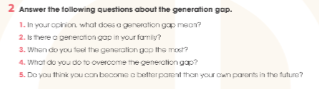
Gợi ý đáp án
1. In my opinion, a generation gap in the difference in the way people think about the world around them. This difference is influenced by the social conditions that people experience during their lives.
2. I must say, Yes, there is. I live with my extended family, which consists of three generations. My grandparents hold very traditional views about everything. My parents are quite open to new ideas, but we still don’t agree on many things including clothes, hairstyles, mobile phone use, and household chores.
3. Well, I feel the generation gap the most whenever we discuss my career choice. My grandparents and even my parents don’t approve of my choice to become a musician. They want me to become an engineer or a teacher.
4. I often talk my parents and grandparents about my generation, my dreams, and my choice. I also ask them about their life experience to better understand our differences so that we can get closer to each other.
5. I’m not really sure. My children will belong to a different generation. I think I will try my best to learn about and understand their generation. I can’t say anything for sure right now.
Writing Unit 2 lớp 11
1. Rewrite the sentences without changing their meanings. Use the correct form of the modal verbs in brackets
(Viết lại các câu để nghĩa không đổi. Sử dụng các động từ khuyết thiếu trong ngoặc)
1. It is not necessary for young people to go to university. (not have to)
→ Young people ____________________________________________ university.
2. It is important that parents be good role models for their children. (must)
→ Parents _______________________________________________ their children.
3. It is advisable for parents and children to spend time together. (should)
→ Parents and children ________________________________________________.
4. Parents are not allowed to leave their young children alone at home. (must not)
→ Parents ____________________________________________________ at home.
5. In many Asian cultures, it is the responsibility of firstborn children to look after their aging
parents. (have to)
→ In many Asian cultures, firstborn children _______________________________.
6. It is not a good idea for women to leave their jobs after getting married. (should not)
→ Women ____________________________________________________ married.
7. It is important for all family members to follow the family house rules. (must)
→ All family members ________________________________________________.
8. People are not allowed to post rude comments on the website. (must not)
→ People ________________________________________________ on the website.
Gợi ý đáp án
1. Young people don’t have to go to university.
2. Parents must be good role models for their children.
3. Parents and children should spend time together.
4. Parents mustn’t/ must not leave their young children alone at home
5. In many Asian cultures, firstborn children have to look after their ageing parents.
6. Women shouldn’t/ should not leave their jobs after getting married.
7. All family members must follow the family rules.
8. People mustn’t/ must not post rude comments on the website.
2. Use the words and phrases below, and add some words where necessary to make meaningful sentences. Change the verbs forms if necessary.
(Sử dựng các từ và cụm từ dưới đây, và thêm một số từ cần thiết để tại thành các câu có nghĩa. Thay đổi dạng động từ nếu cần thiết)
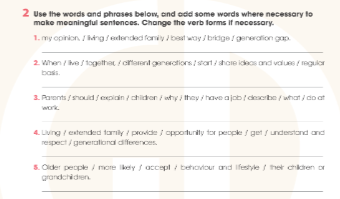
Gợi ý đáp án
1. In my opinion, living with extended family is the best way to bridge the generation gap.
(Theo tôi, sống với đại gia đình là cách tốt nhất để thu hẹp khoảng cách thế hệ.)
2. When living/ they live together, different generations start sharing ideas and values on a regular basis.
(Khi sống cùng nhau, các thế hệ khác nhau bắt đầu chia sẻ ý tưởng và giá trị một cách thường xuyên.)
3. Parents should explain to (their) children why they (need to) have a job and decorate what they do at work.
(Cha mẹ nên giải thích cho con cái (của họ) tại sao họ (cần) có một công việc và mô tả những gì họ làm tại nơi làm việc.)
4. Living with extended family provides an opportunity for people to get to understand and respect generational differences.
(Sống chung với đại gia đình tạo cơ hội để mọi người hiểu và tôn trọng sự khác biệt thế hệ.)
5. Older people are more likely to accept the behaviour and lifestyle of their children or grandchildren.
(Người lớn tuổi dễ chấp nhận hành vi và lối sống của con cháu họ.)
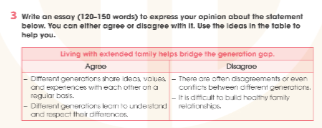
3. Write an essay (120-150 words) to express your opinion about the statement below. You can either agree or disagree with it. Use the ideas in the table to help you.
(Viết một bài viết (120-150 từ) để bày tỏ quan điểm của bạn về câu sau đây. Bạn cỏ thể đồng ý hoặc không đồng ý. Sử dụng các ý tưởng trong bảng để hỗ trợ bạn)
Gợi ý
Quan điểm Agree
In my view, living with extended family is the best way to bridge the generation gap.
Firstly, when living together, different generations regularly share ideas, values, and experiences. For instance, parents, even aunts, and uncles may tell their work-related engagements to youngsters. In return, children may discuss school life, companions, preferences and ask for advice. These daily interactions enable individuals from different generations to develop a deeper understanding of one another.
Furthermore, living with extended family provides an opportunity for people to learn to understand and respect generational differences. For instance, teenagers start to appreciate their grandparents' values while older people are more likely to accept the behaviour and lifestyle of their grandchildren. In this way, individuals from distinct generations can establish connections and boost relationships.
In conclusion, when people live with their extended family, they tend to share ideas, values, and experiences, and learn to accept their differences. This helps bridge the generation gap and strengthen healthy family bonds.
Bài dịch
Theo quan điểm của tôi, sống với đại gia đình là cách tốt nhất để thu hẹp khoảng cách thế hệ.
Thứ nhất, khi sống cùng nhau, các thế hệ khác nhau thường xuyên chia sẻ ý kiến, giá trị và kinh nghiệm. Ví dụ, cha mẹ, thậm chí cả cô dì chú bác có thể kể những công việc liên quan đến công việc của họ cho con cái nghe. Đổi lại, trẻ em có thể thảo luận về cuộc sống ở trường, bạn đồng hành, sở thích và xin lời khuyên. Những tương tác hàng ngày này cho phép các cá nhân từ các thế hệ khác nhau phát triển sự hiểu biết sâu sắc hơn về nhau.
Hơn nữa, sống với đại gia đình tạo cơ hội cho mọi người học cách hiểu và tôn trọng sự khác biệt thế hệ. Ví dụ, thanh thiếu niên bắt đầu đánh giá cao các giá trị của ông bà trong khi những người lớn tuổi dễ chấp nhận hành vi và lối sống của cháu họ hơn. Bằng cách này, các cá nhân từ các thế hệ khác nhau có thể thiết lập kết nối và thúc đẩy các mối quan hệ.
Tóm lại, khi mọi người sống với đại gia đình của họ, họ có xu hướng chia sẻ ý tưởng, giá trị và kinh nghiệm, đồng thời học cách chấp nhận sự khác biệt của họ. Điều này giúp thu hẹp khoảng cách thế hệ và củng cố mối quan hệ gia đình lành mạnh.
Trên đây là lời giải SBT Tiếng Anh 11 Global Success Unit 2 giúp học sinh hệ thống và ôn luyện các nội dung trọng tâm của The Generation Gap. Các em nên tự hoàn thành từng bài trước khi kiểm tra đáp án để củng cố kiến thức và nâng cao khả năng vận dụng tiếng Anh.


