Tiếng Anh 11 Global Success Unit 3 Listening
Unit 3 lớp 11 Listening trang 33 - Global success
Tiếng Anh 11 Global Success Unit 3 Listening cung cấp lời giải chi tiết các bài tập trang 33 thuộc chủ đề Living in a Smart City . Nội dung gồm đáp án, transcript, bản dịch bài nghe và gợi ý thảo luận, giúp học sinh luyện nghe hiểu và mở rộng từ vựng về thành phố thông minh.
Living in a smart city
(Việc sống trong thành phố thông minh)
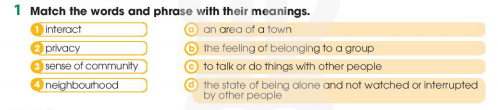
1. Match the words and phrases with their meanings.
(Nối các từ và cụm từ với ý nghĩa của chúng.)
Gợi ý đáp án
|
1. c |
2. d |
3. b |
4. a |
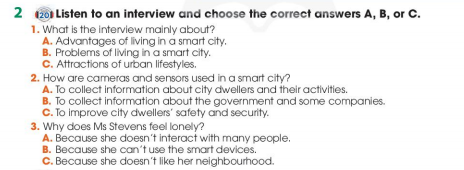
2. Listen to an interview and choose the correct answers A, B, or C.
(Nghe một cuộc phỏng vấn và chọn câu trả lời đúng A, B, hoặc C.)
Bài nghe
Gợi ý đáp án
|
1. B |
2. A |
3. A |
Nội dung bài nghe
Host: Good morning. Welcome to our weekly programme Urban Lifestyle. In today’s programme, we’ll be talking about the disadvantages of living in a smart city. Joining me now in the studio is Ms. Stevens, a city dweller who has been living in a smart city for a year now. Good morning, Ms. Stevens.
(Chào buổi sáng. Chào mừng đến với chương trình hàng tuần Lối sống đô thị của chúng tôi. Trong chương trình hôm nay, chúng ta sẽ nói về những bất lợi khi sống trong một thành phố thông minh. Tham gia cùng tôi trong phòng thu bây giờ là cô Stevens, một cư dân thành phố đã sống trong một thành phố thông minh được một năm nay. Chào buổi sáng, cô Stevens.)
Ms Stevens: Good morning.
(Chào buổi sáng)
Host: I understand that you don't like living in the smart city. Why is that? What are you worried about most?
(Tôi hiểu rằng cô không thích sống ở thành phố thông minh. Tại sao vậy? Cô lo lắng về điều gì nhất?)
Ms Stevens: Well, my main worry is losing my right to privacy in public places. You know, cameras and sensors are everywhere, and they collect information about me and my activities.
(Chà, lo lắng chính của tôi đó là mất quyền riêng tư ở những nơi công cộng. Bạn biết đấy, máy ảnh và cảm biến ở khắp mọi nơi và chúng thu thập thông tin về tôi cũng như các hoạt động của tôi.)
Host: So it seems that someone is watching you all the time, right?
(Vì vậy, nó giống như ai đó đang theo dõi bạn mọi lúc, phải không?)
Ms. Stevens: Exactly. The government and some companies have so much personal information about city dwellers, but we don't know how they might use it.
(Chính xác. Chính phủ và một số công ty có rất nhiều thông tin cá nhân về cư dân thành phố, nhưng chúng tôi không biết họ sẽ sử dụng chúng như thế nào.)
Host: Yes, it's a bit worrying, but this information probably enables smart cities to create useful programmes and improve people's lives. Smart technologies can also help with daily household chores. Are you not happy with that?
(Vâng, hơi đáng lo ngại đó ạ, nhưng thông tin này có thể giúp các thành phố thông minh tạo ra các chương trình hữu ích và cải thiện cuộc sống của người dân. Công nghệ thông minh cũng có thể hỗ trợ các công việc gia đình hàng ngày. Cô không hài lòng với điều đó sao?)
Ms. Stevens: No, I don't think so. It took me a long time to get familiar with all the smart devices at home. I don't really have any friends to ask for help in the neighbourhood.
Host: This leads me to my next question. Do you think there is a sense of community in your neighbourhood?
(Không, tôi không nghĩ vậy. Tôi đã mất một thời gian dài để làm quen với tất cả các thiết bị thông minh ở nhà. Tôi thực sự không có bất kỳ người bạn nào để nhờ giúp đỡ trong khu phố.)
Ms. Stevens: No, there isn’t. I interact with very few people face to face because most of the activities can be done online.
(Điều này dẫn tôi đến câu hỏi tiếp theo. Cô có nghĩ rằng ở tồn tại ý thức cộng đồng ở khu vực bạn sống không?)
Host: Do you feel lonely sometimes?
(Có khi nào cô cảm thấy cô đơn không?)
Ms Stevens: Yes, our smart devices are all connected, but it seems we're becoming lonelier than any previous generation.
(Có, tất cả những thiết bị thông minh của chúng ta đều được kết nối, nhưng có vẻ như chúng ta đang trở nên cô đơn hơn bất kỳ thế hệ nào trước đây.)
Host: That's very sad. Thank you for sharing your thoughts with us. Ms Stevens.
(Điều đó thật đáng buồn. Cảm ơn cô đã chia sẻ suy nghĩ của cô với chúng tôi, cô Stevens.)
Ms Stevens: You're welcome.
(Rất hân hạnh)
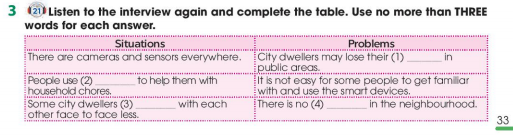
3. Listen to the interview again and complete the table. Use no more than THREE words for each answer.
(Nghe lại cuộc phỏng vấn và hoàn thành bảng. Sử dụng không quá BA từ cho mỗi câu trả lời.)
Bài nghe
Gợi ý đáp án
|
1. right to privacy |
2. smart technologies |
|
3. interact |
4. sense of community |
Nội dung bài nghe
Host: Good morning. Welcome to our weekly programme Urban Lifestyle. In today’s programme, we’ll be talking about the disadvantages of living in a smart city. Joining me now in the studio is Ms. Stevens, a city dweller who has been living in a smart city for a year now. Good morning, Ms. Stevens.
Ms Stevens: Good morning.
Host: I understand that you don't like living in the smart city. Why is that? What are you worried about most?
Ms Stevens: Well, my main worry is losing my right to privacy in public places. You know, cameras and sensors are everywhere, and they collect information about me and my activities.
Host: So it seems that someone is watching you all the time, right?
Ms. Stevens: Exactly. The government and some companies have so much personal information about city dwellers, but we don't know how they might use it.
Host: Yes, it's a bit worrying, but this information probably enables smart cities to create useful programmes and improve people's lives. Smart technologies can also help with daily household chores. Are you not happy with that?
Ms. Stevens: No, I don't think so. It took me a long time to get familiar with all the smart devices at home. I don't really have any friends to ask for help in the neighbourhood.
Host: This leads me to my next question. Do you think there is a sense of community in your neighbourhood?
Ms. Stevens: No, there isn’t. I interact with very few people face to face because most of the activities can be done online.
Host: Do you feel lonely sometimes?
Ms Stevens: Yes, our smart devices are all connected, but it seems we're becoming lonelier than any previous generation.
Host: That's very sad. Thank you for sharing your thoughts with us. Ms Stevens.
Ms Stevens: You're welcome.
4. Work in groups. Discuss the following questions.
(Làm việc nhóm. Thảo luận các câu hỏi sau.)
Do you agree with Ms Stevens? Which of the disadvantages she mentioned do you think is the most serious? Why?
(Bạn có đồng ý với cô Stevens không? Bạn nghĩ nhược điểm nào trong số những nhược điểm mà cô ấy đề cập là nghiêm trọng nhất? Tại sao?)
Gợi ý đáp án
From my point of view, I share Ms. Stevens' concerns about the negative effects of living in a smart city. One of the main disadvantages is the potential loss of personal privacy. With surveillance cameras and advanced sensors installed everywhere, people's daily activities can be constantly recorded and monitored. While these technologies help improve public security and city management, they may also create a feeling of insecurity among residents. Moreover, personal information could be misused if it is not properly protected. For this reason, I believe that protecting citizens' privacy should be a top priority when developing smart cities.
(Theo quan điểm của tôi, tôi đồng tình với những lo ngại của cô Stevens về những tác động tiêu cực khi sống trong một thành phố thông minh. Một trong những bất lợi lớn nhất là nguy cơ mất quyền riêng tư cá nhân. Với việc camera giám sát và các cảm biến hiện đại được lắp đặt ở khắp mọi nơi, các hoạt động hằng ngày của người dân có thể liên tục bị ghi lại và theo dõi. Mặc dù những công nghệ này giúp cải thiện an ninh công cộng và công tác quản lý đô thị, chúng cũng có thể khiến người dân cảm thấy bất an. Hơn nữa, thông tin cá nhân có thể bị sử dụng sai mục đích nếu không được bảo vệ đúng cách. Vì lý do này, tôi tin rằng bảo vệ quyền riêng tư của người dân cần được đặt lên hàng đầu trong quá trình phát triển các thành phố thông minh.)
Phần Tiếng Anh 11 Global Success Unit 3 Listening giúp học sinh hiểu những lợi ích và hạn chế của cuộc sống trong thành phố thông minh, đồng thời rèn kỹ năng nghe ý chính và thông tin chi tiết. Các em nên nghe lại bài phỏng vấn, đối chiếu transcript và luyện đọc theo từng vai để cải thiện khả năng nghe cũng như phát âm.


