Từ vựng unit 4 lớp 8 Global Success
Từ vựng unit 4 tiếng Anh 8 Global Success: Ethnic groups of Viet Nam
Từ vựng tiếng Anh lớp 8 Global Success unit 4 Ethnic groups of Viet Nam bao gồm những từ mới tiếng Anh quan trọng xuất hiện trong unit 4 lớp 8 sách mới giúp các em ôn tập Từ vựng tiếng Anh 8 Kết nối tri thức theo từng unit hiệu quả.
Infographic Từ vựng tiếng Anh 8 unit 4 Global Success
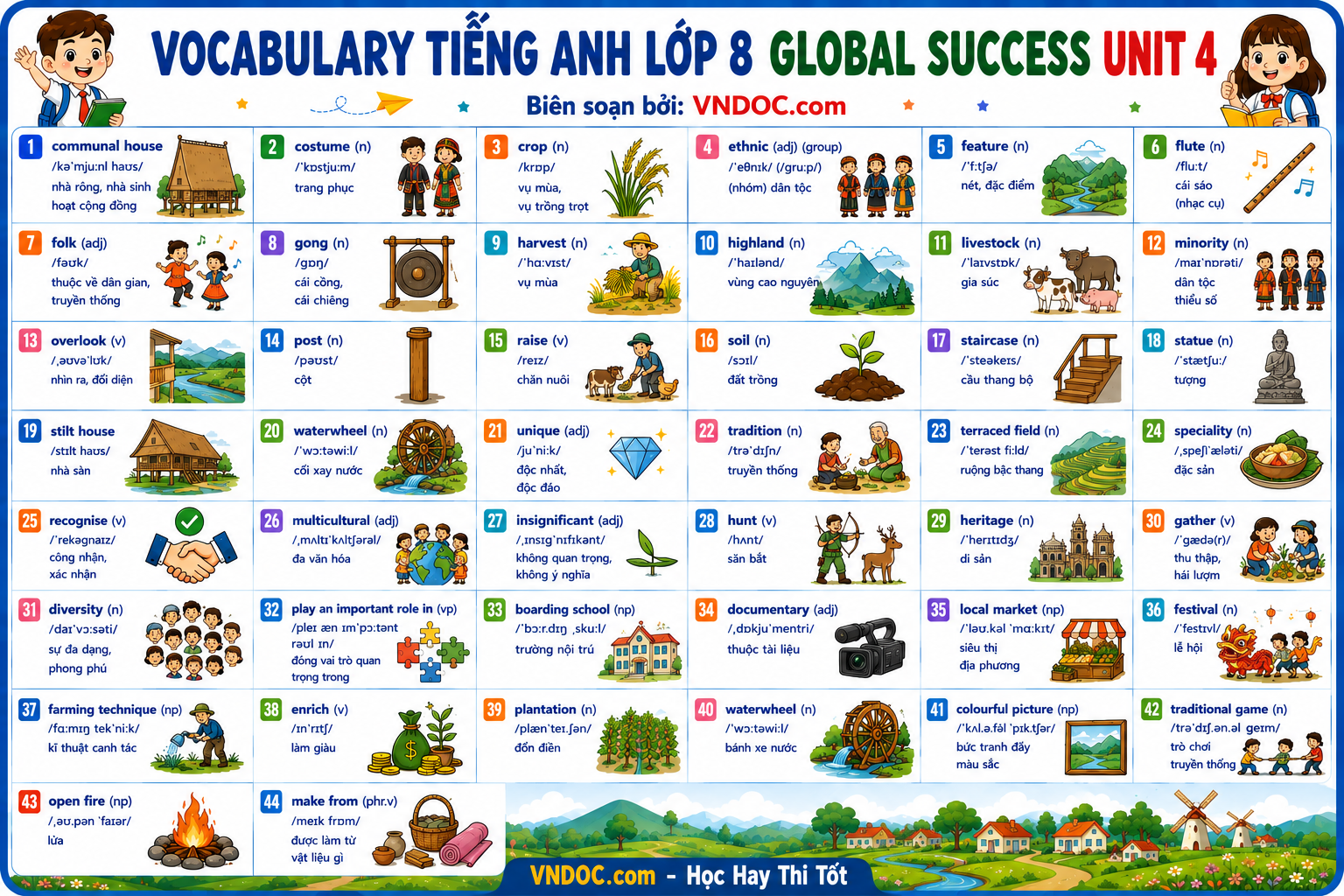
I. Từ vựng tiếng Anh lớp 8 Global Success unit 4 Ethnic groups of Viet Nam
|
Từ mới |
Phiên âm |
Định nghĩa |
|
1. communal house |
/kəˈmjuːnl haʊs/ |
nhà rông, nhà sinh hoạt cộng đồng |
|
2. costume (n) |
/ˈkɒstjuːm/ |
trang phục |
|
3. crop (n) |
/krɒp/ |
vụ mùa, vụ trồng trọt |
|
4. ethnic (adj) (group) |
/ˈeθnɪk/ (/ɡruːp/) |
(nhóm) dân tộc |
|
5. feature (n) |
/ˈfːtʃə/ |
nét, đặc điểm |
|
6. flute (n) |
/fluːt/ |
cái sáo (nhạc cụ) |
|
7. folk (adj) |
/fəʊk/ |
thuộc về dân gian, truyền thống |
|
8. gong (n) |
/ɡɒŋ/ |
cái cồng, cái chiêng |
|
9. harvest (n) |
/ˈhɑːvɪst/ |
vụ mùa |
|
10. highland (n) |
/ˈhaɪlənd/ |
vùng cao nguyên |
|
11. livestock (n) |
/ˈlaɪvstɒk/ |
gia súc |
|
12. minority (n) |
/maɪˈnɒrəti/ |
dân tộc thiểu số |
|
13. overlook (v) |
/ˌəʊvəˈlʊk/ |
nhìn ra, đối diện |
|
14. post (n) |
/pəʊst/ |
cột |
|
15. raise (v) |
/reɪz/ |
chăn nuôi |
|
16. soil (n) |
/sɔɪl/ |
đất trồng |
|
17. staircase (n) |
/ˈsteəkeɪs/ |
cầu thang bộ |
|
18. statue (n) |
/ˈstætʃuː/ |
tượng |
|
19. stilt house |
/stɪlt haʊs/ |
nhà sàn |
|
20. waterwheel (n) |
/ˈwɔːtəwiːl/ |
cối xay nước |
|
21. unique (adj) |
/juˈniːk/ |
độc nhất, độc đáo |
|
22. tradition (n) |
/trəˈdɪʃn/ |
truyền thống |
|
23. terraced field (n) |
/ˈterəst fiːld/ |
ruộng bậc thang |
|
24. speciality (n) |
/ˌspeʃiˈæləti/ |
đặc sản |
|
25. recognise (v) |
/ˈrekəɡnaɪz/ |
công nhận, xác nhận |
|
26. multicultural (adj) |
/ˌmʌltiˈkʌltʃərəl/ |
đa văn hóa |
|
27. insignificant (adj) |
/ˌɪnsɪɡˈnɪfɪkənt/ |
không quan trọng, không ý nghĩa |
|
28. hunt (v) |
/hʌnt/ |
săn bắt |
|
29. heritage (n) |
/ˈherɪtɪdʒ/ |
di sản |
|
30. gather (v) |
/ˈɡæðə(r)/ |
thu thập, hái lượm |
|
31. diversity (n) |
/daɪˈvɜːsəti/ |
sự đa dạng, phong phú |
|
32. play an important role in (vp) |
/pleɪ æn ɪmˈpɔː.tənt rəʊl ɪn/ |
đóng vai trò quan trọng trong |
|
33. boarding school (np) |
/ˈbɔːr.dɪŋ ˌskuːl/ |
trường nội trú |
|
34. documentary (adj) |
/ˌdɒkjuˈmentri/ |
thuộc tài liệu |
|
35. local market (np) |
/ˈləʊ.kəl ˈmɑː.kɪt/ |
siêu thị địa phương |
|
36. festival (n) |
/ˈfestɪvl/ |
lễ hội |
|
37. farming technique (np) |
/fɑːmɪŋ tekˈniːk/ |
kĩ thuật canh tác |
|
38. enrich (v) |
/ɪnˈrɪtʃ/ |
làm giàu |
|
39. plantation (n) |
/plænˈteɪ.ʃən/ |
đồn điền |
|
40. waterwheel (n) |
/ˈwɔːtəwiːl/ |
bánh xe nước |
|
41. colourful picture (np) |
/ˈkʌl.ə.fəl ˈpɪk.tʃər/ |
bức tranh đầy màu sắc |
|
42. traditional game (n) |
/trəˈdɪʃ.ən.əl ɡeɪm/ |
trò chơi truyền thống |
|
43. open fire (np) |
/ˌəʊ.pən ˈfaɪər/ |
lửa |
|
44. make from (phr.v) |
/meɪk frɒm/ |
được làm từ vật liệu gì |
II. Word form tiếng Anh 8 unit 4 Global Success
|
Word |
Related words |
Transcription |
Meaning |
|
complicated (adj) tinh vi, phức tạp |
complicate (v) |
/ˈkɒmplɪkeɪt/ |
làm phức tạp |
|
complication (n) |
/ˌkɒmplɪˈkeɪʃn/ |
sự phức tạp? sự rắc rối |
|
|
ethnic (adj) (nhóm) dân tộc |
ethnically (adv) |
/ˈeθnɪkli/ |
về mặt dân tộc |
|
ethnology (n) |
/eθˈnɒlədʒi/ |
dân tộc học |
|
|
ethnologist (n) |
/eθˈnɒlədʒɪst/ |
nhà dân tộc học |
|
|
ethnological (adj) |
/ˌeθnəˈlɒdʒɪkl/ |
thuộc về dân tộc học |
|
|
curious (adj) tò mò, muốn tìm hiểu |
curiously (adv) |
/ˈkjʊəriəslɪ/ |
tò mò, hiếu kỳ |
|
curiousness (n) |
/ˈkjʊəriəsnɪs/ |
tính tò mò, tính kỳ dị |
|
|
curiosity (n) |
/ˌkjʊəriˈɒsəti/ |
sự tò mò, tính tò mò |
|
|
tradition (n) truyền thống |
traditional (adj) |
/trəˈdɪʃənl/ |
thuộc về truyền thống |
|
traditionalism (adv) |
/trəˈdɪʃənəlɪzəm/ |
chủ nghĩa truyên thống |
|
|
traditionalist (n) |
/trəˈdɪʃənəlɪst/ |
người theo chu nghĩa truyền thống |
|
|
speciality (n) đặc sản |
special (adj) |
/ˈspeʃl/ |
đặc biệt, riêng biệt |
|
adore (v) yêu thích, say mê |
adorable (adj) |
/əˈdɔːrəbl/ |
đáng yêu, đáng quý mến |
|
adorably (adv) |
/əˈdɔːrəbli/ |
đáng mến, đáng yêu |
|
|
adoration (n) |
/ˌædəˈreɪʃn/ |
sự kính yêu, quý mến |
|
|
addicted (adj) nghiện |
addict (n) |
/ˈædɪkt/ |
người nghiện, người say mê cái gì đó |
|
addiction (n) |
/əˈdɪkʃn/ |
thói nghiện |
|
|
addictive (adj) |
/ˈædətɪv/ |
có thể gây nghiện |
|
|
crazy (adj) rất thích, quá đam mê |
craziness (n) |
/ˈkreɪzinəs/ |
sự say mê, sự điên dại |
|
crazily (adv) |
/ˈkreɪzɪli/ |
một cách say mê, điên cuồng |
|
|
communicate (v) giao tiếp |
communication (n) |
/kəˌmjuːnɪˈkeɪʃn/ |
sự giao tiếp |
|
communicative (adj) |
/kəˈmjuːnɪkeɪtɪv/ |
dễ lan truyền, cởi mở, dễ giao tiếp |
|
|
communicant (n) |
/kəˈmjuːnɪkənt/ |
người truyền tin, người đưa tin |
|
|
prefer (v) thích hơn |
preferable (adj) |
/ˈprefrəbl/ |
thích hơn, được ưa chuộng hơn |
|
preferably (adv) |
/ˈprefrəbli/ |
tốt nhất là |
|
|
preference (n) |
/ˈprefrəns/ |
sở thích, sự ưa thích hơn |
|
|
satisfied (adj) hài lòng |
satisfy (v) |
/ˈsætɪsfaɪ/ |
làm hài lòng, làm thỏa mãn |
|
satisfactory (adj) |
/ˌsætɪsˈfæktəri/ |
vừa ý, thoả đáng |
|
|
satisfaction |
/ˌsætɪsˈfækʃn/ |
sự thoả mãn, sự toại nguyện |
|
|
snowboarding (n) trượt tuyết bằng ván |
snowboard (n) |
ˈsnəʊbɔːrd/ |
cái ván trượt |
|
snowboarder (n) |
/ˈsnəʊbɔːrdər/ |
người trượt ván |
|
|
socialise (v) giao tiếp để tạo mối quan hệ |
socialization (n) |
/ˌsəʊʃələˈzeɪʃn/ |
xã hội hoá |
|
socialite (n) |
/ˈsəʊʃəlaɪt/ |
người có vai vế trong xã hội, người giao thiệp rộng |
|
|
socialist (n) |
/ˈsəʊʃəlɪst/ |
người theo chủ nghĩa xã hội |
III. Bài tập Từ vựng tiếng Anh lớp 8 Global Success unit 4 có đáp án
Ex1. Choose the correct answer to complete the sentences.
1. Viet Nam has 54 ethnic communities, with Kinh people making up the ________________ of the total population. (majority/ minority)
2. Tourists can find breathtakingly beautiful terraced rice fields in the ________________ Vietnam. (Northern/ Southern)
3. Although their musical instrument looks ________________, it's hard for anyone to make one. (complicated/ simple)
4. Many ethnic kids can communicate fluently in body and ________________ language but they can’t write. (spoken/ written)
5. Thai girls often perform muaxoe- their ________________ dances in spring festivals. (modern/ traditional)
6. You can’t find terraced fields in the ________________ because the land is flat. (highlands/ deltas)
7. Most of Khmer people are farmers, and farming plays an ________________ role in their economy. (important/ insignificant)
8. Hunting and gathering are still some ethnic groups’ ________________ ways of living. (basic/ developed)
Ex2. Complete each sentence below by filling in each blank with the correct form of the word provided.
1. Vietnam is one of the most _____ diverse countries in South East Asia. (ETHNIC)
2. The Pa Then believe that the god of fire brings them _______and prosperity. (PEACEFUL)
3. The Tay community practice ________religious beliefs including ancestor worship.
(TRADITION)
4. The population of Vietnam contains a rich ______of ethnic groups. (DIVERSE )
5. Each time I returned I was struck by the ______ of Sapa and its people. ( UNIQUE)
Ex3. Choose the word/ phrase/ sentence (A, B, C, or D) that best fits the space in each sentences or best answers the question.
1. My Son sanctuary has been recognized by UNESCO as a world _______.
A. ethnic minorities
B. open-air market
C. heritage site
D. terraced field
2. If you go to Sapa, you can distinguish people from different ethnic groups by their _______.
A. costumes
B. livestock
C. highlands
D. staircases
3.Xoe and Sap are_____ of Thai ethnic minority people.
A. modern dances
B. jazz dances
C. lion dances
D. folk dances
4. We spent hours in _______ house to talk with local people.
A. terraced
B. close
C. communal
D. awesome
5. She wore a _______ costume of bright pink silk.
A. peaceful
B. ethnic
C. musical
D. traditional
6. You can visit Gia Lai to enjoy the gong _______.
A. special
B. different
C. communal
D. festival
Ex4. Circle the correct options to complete the sentences.
1. Bamboo dancing is a popular __________ of the Thai people.
A. communal house B. folk dance
2. The dan tinh is a __________ of Tay ethnic group.
A. a musical instrument. B. five-colour sticky rice.
3. We live in a stilt house that is built on __________.
A. high posts B. highland
4. The largest and tallest house in a village of ethnic minority group is the __________.
A. stilt house B. communal house
5. Ethnic people have to climb a __________ to enter their house.
A. bamboo B. staircase
6. The Kinh use __________ to make banh chung and banh tet.
A. sticky rice B. wooden statue
Ex5. Choose the letter A, B, C, or D to indicate the word(s) CLOSEST in meaning to the underlined word(s) in each of the following sentences:
1. Some ethnic peoples in the mountainous regions still keep their traditional way of farming.
A. social B. modern C. conventional D. successful
2. Gathering and hunting still play an important role in the economy of the Laha.
A. significant B. major C. simple D. developed
3. Sa Pa is famous for the terraced fields located in the mountainous area.
A. peaceful B. well-known C. musical D. traditional
4. The Rong House is where community activities take place, such as meetings, wedding ceremonies, or prayer ceremonies.
A. enrich B. travel C. happen D. weave
5. Many ethnic minority children in remote or mountainous areas are studying at boarding schools.
A. divided B. modern C. abutting D. solitary
ĐÁP ÁN CÓ TRONG FILE TẢI VỀ.
Trên đây là Từ vựng tiếng Anh lớp 8 Global Success unit 4 Ethnic groups of Viet Nam. VnDoc.com hy vọng rằng tài liệu Từ vựng tiếng Anh 8 sách mới trên đây sẽ giúp các em ôn tập hiệu quả.
Ngoài ra,VnDoc.com đã đăng tải nhiều tài liệu Học tốt tiếng Anh 8 Global Success khác tại: